
How It Works
Lead2Cash builds a digital twin of your revenue operation. Instead of analyzing disconnected reports, the system models how your business actually moves from the first sales conversation to collected cash. Once the model exists, both your team and AI can analyze the structure and identify improvements.
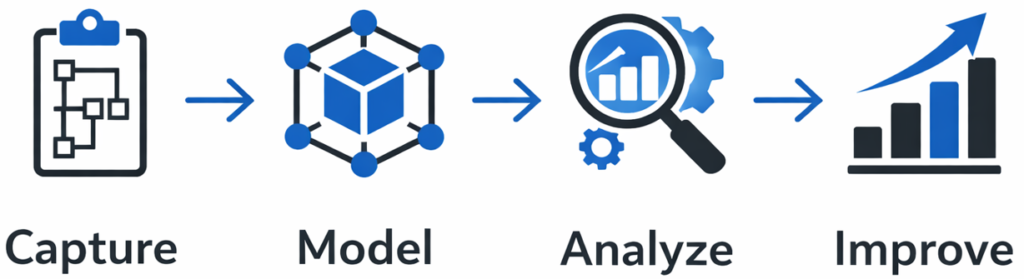
The process happens in four stages.
- Map the Revenue System
The first step is building a complete picture of how revenue flows through the company. Lead2Cash maps the full lead-to-cash journey including:
- departments involved in each deal
- handoffs between teams
- tools and software used
- time spent in each stage
- labor and operational costs
This creates a visual operational map of the business. The map is not a diagram. It is a structured model of how revenue actually moves through the organization.
- Build the Operational Model
As the process map is completed, Lead2Cash constructs a computational model of the revenue operation. The system connects multiple layers of information:
- process flow between departments
- tool stack and integrations
- team structure and labor cost
- timing of each operational step
Together these layers form a digital twin of the revenue cycle. Because the model mirrors the real operation, it can reveal problems that are normally hidden across departments.
- Analyze the System
Once the map reaches a complete state, the system analyzes the structure of the revenue operation. Lead2Cash identifies patterns such as:
- delays between departments
- bottlenecks in the delivery or billing stages
- redundant or disconnected software tools
- operational steps that extend the cash conversion cycle
Each finding is tied directly to the part of the process that created it. Nothing appears as a black box recommendation.
- Prioritize Improvements
Not every issue should be fixed at once. Lead2Cash sequences improvements based on how the revenue system actually works. Problems at the beginning of the revenue flow are addressed before downstream fixes. This prevents teams from optimizing steps that depend on unresolved upstream issues. The result is a clear 30-60-90 day improvement plan based on the structure of the business.
The Result
Most companies know they have operational friction but cannot see exactly where it originates. Lead2Cash makes the structure visible. Once the system is mapped, improvement becomes a matter of adjusting the model and executing the changes. The map becomes a permanent operational layer that evolves with the business.
See how your revenue operation actually works.